Prototype Construction
A prototype can have various requirements. From functional verification prototypes to design prototypes and functional prototypes, we can produce everything. We manufacture the prototypes for our own products ourselves. To do this, we use the rapid prototyping process (see below). Instead of directly constructing the complete product on the computer in minute detail, we utilise our capabilities with the 3D printing process to quickly achieve a precise product with just a few iterations. For this, we mostly use recycled PETG filament from the company Recyclingfabrik. This not only has advantages in terms of sustainability. The Recyclingfabrik is also located in Braunschweig, allowing us to quickly obtain supplies.
I need a prototype. What is possible?
Through our on-site manufacturing capabilities and our flexible craftsmanship skills, we are able to find a solution for just about anything and develop a prototype. We are skilled in working with steel, aluminium, wood, epoxy resin, GRP, plastic (FDM 3D printing), and many processing methods. We bring the necessary expertise to meaningfully combine these materials.
With the help of our 3D scanner, we can also capture complex geometries and use them for the creation of prototypes connected to other components. We also use this process, for example, in the creation of the grinding machine mounts for our grinding support.
Please feel free to contact us via the contact form.
Contact form
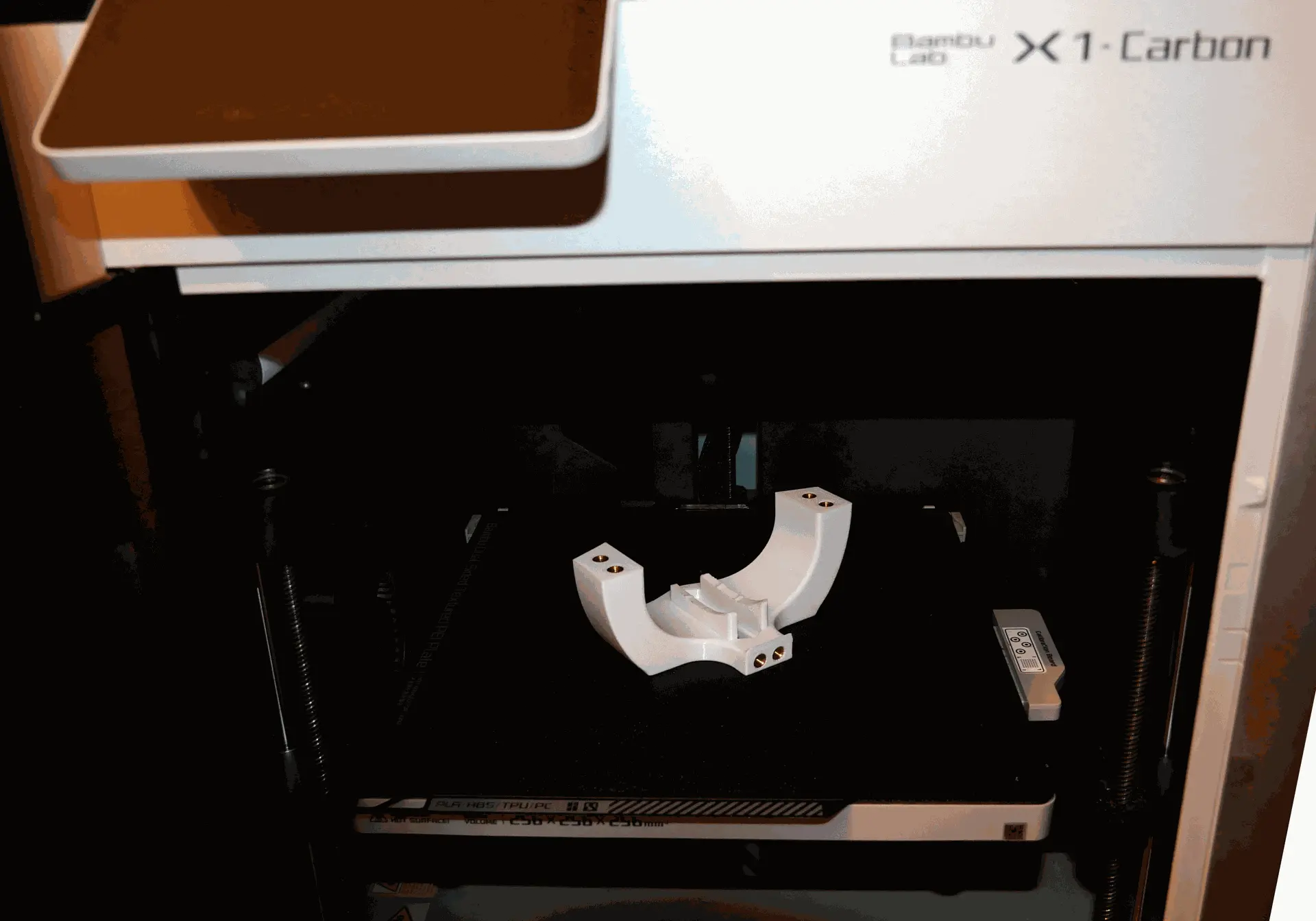
Rapid Prototyping: From Idea to Tangible Model in Record Time!
In today's fast-paced product development, time is the crucial factor. With our rapid prototyping process, we transform your concepts and ideas into precise, physical models in no time. Experience how your visions take tangible shape through the use of state-of-the-art 3D printing and 3D scanning technology.
Our process: The synergy of 3D scanning and 3D printing
We have optimised our workflow to provide you with maximum speed and flexibility. Whether you already have a digital model or are starting with a physical object – we have the right solution.
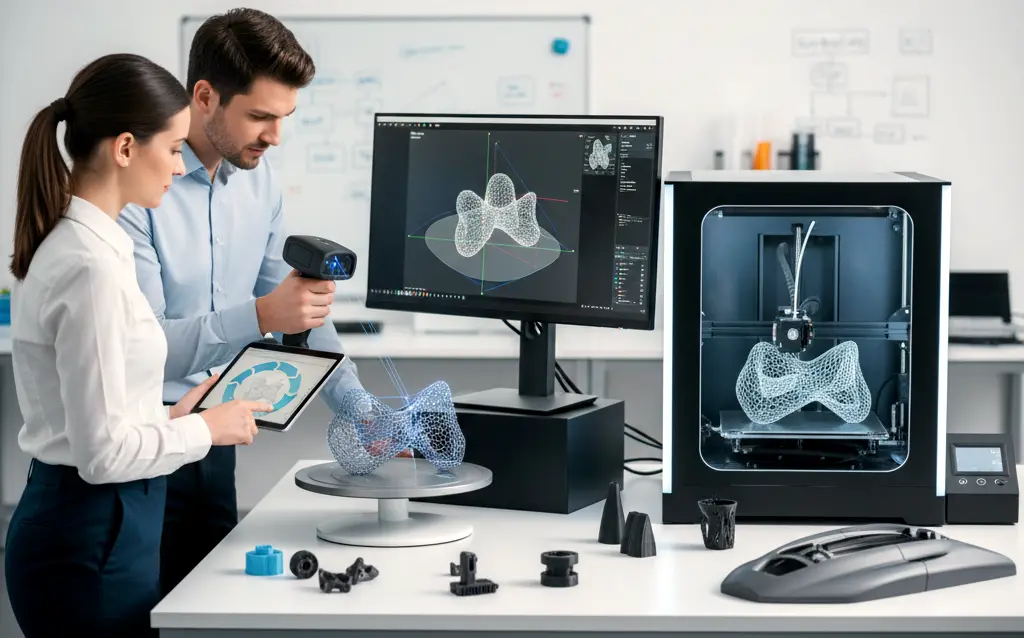
Step 1: The Digitalisation of Your Idea
The starting point is always a digital 3D model. There are two paths here:
- You already have CAD data? Perfect! We will take your existing design data and prepare it directly for printing. This preparation is necessary because the 3D printing process has its own peculiarities and requirements. However, due to our daily experience with the process, this can be completed in no time.
- Do you have a physical object? No problem! With our high-resolution 3D scanner, we capture your component, a handcrafted model, or an existing product down to the smallest detail. The result is a precise digital representation that we can use as a basis for further development or direct printing. This process, also known as reverse engineering, is ideal for optimising existing designs or reproducing objects without a digital template. Although this process may sound time-consuming, it can be completed quickly by an experienced user. Fully digitising small to medium-sized objects usually takes only about 1-3 hours, depending on the complexity of the object. For large objects, such as an entire vehicle, the workload is higher - potentially taking several days.
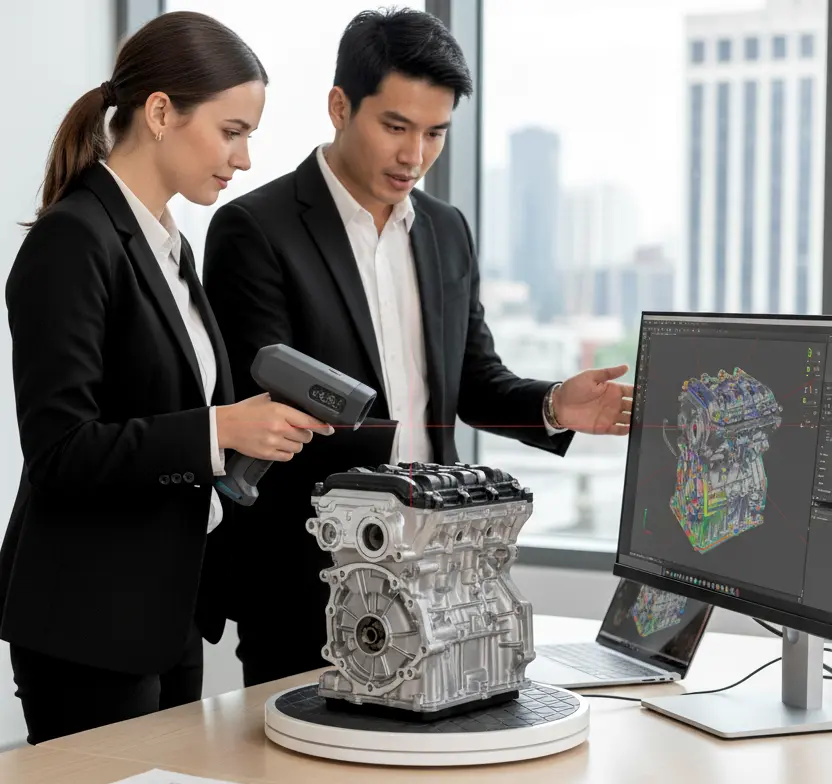
Step 2: The manufacturing in the 3D printer
Once the digital model is finalised, our 3D printer comes into play. Layer by layer, a real, physical component is created from the digital design. This additive manufacturing process allows us to produce even highly complex geometries quickly and cost-effectively, which would take conventional methods weeks and be significantly more expensive. Our printers operate reliably and consistently deliver good results. While the printer is working, we can already turn our attention to the next tasks.
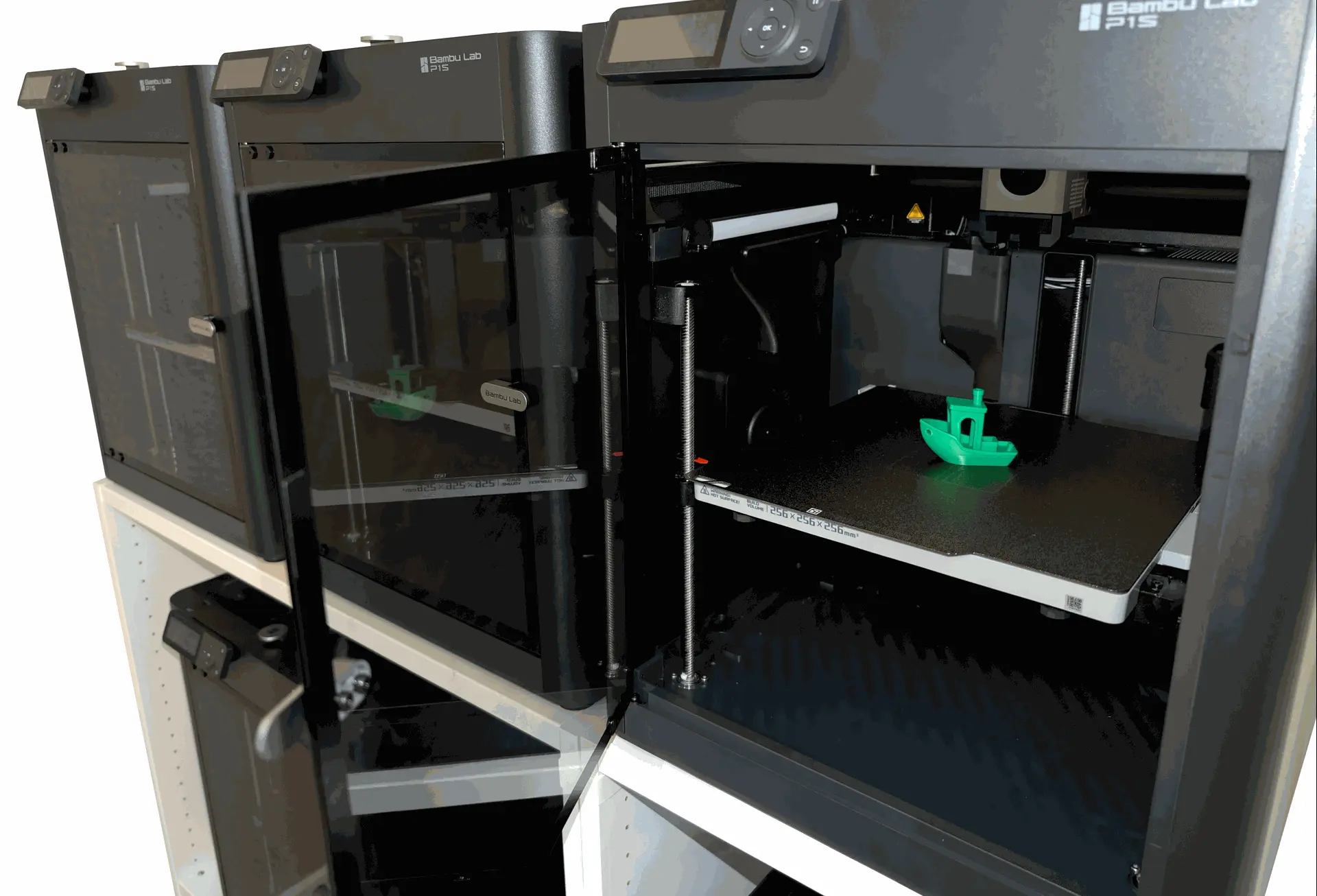
Step 3: Test, Adjust, Perfect
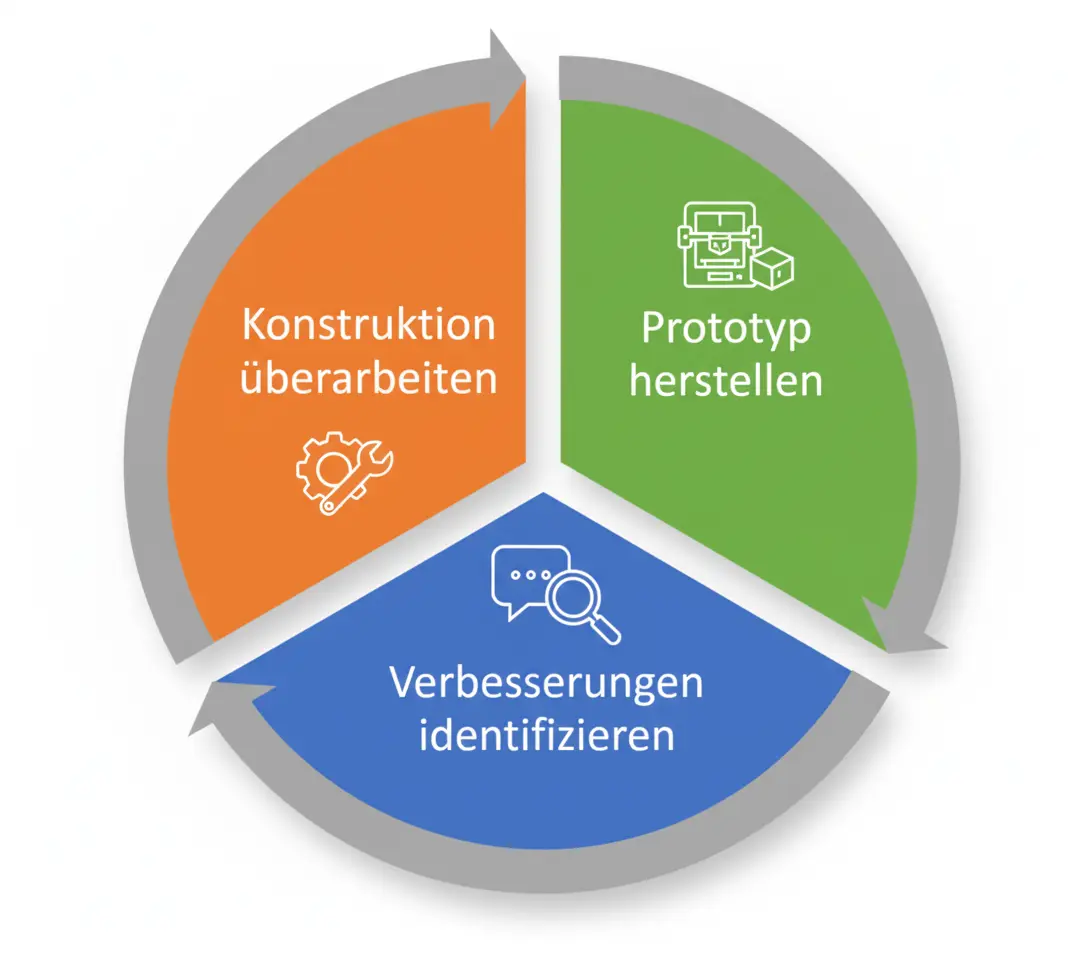
You will have a prototype in your hands in no time, which you can test extensively. Check the fit, the feel, and the functionality. The great advantage? Necessary changes can be implemented immediately in the digital model, and a new, improved version can be printed within hours. This iterative cycle is repeated until the result meets your expectations 100%.
To avoid burdening the environment with new plastic, we use high-quality rPETG from the recycling factory. The material has excellent properties for prototyping. It withstands not only mechanical stresses but also thermal stress to a certain degree and can be recycled repeatedly. We collect our waste in a sorted manner and send it back to the recycling factory. While others merely talk about circular economy, we implement it directly!
Your advantages at a glance
How to benefit from Rapid Prototyping
Time saving
Shorten your development cycles from weeks to days. Bring your products to market faster and secure a crucial competitive advantage.
Cost reduction
Avoid expensive tool costs in the early stages of development. By testing the physical model early, you can identify design flaws before they incur high costs in mass production.
Make better decisions
A physical model speaks more than a thousand images. Make informed design decisions, present your ideas convincingly to investors or clients, and gather valuable feedback.
Design freedom
Realise complex geometries and bionic structures that would be difficult or very labour-intensive to implement using traditional manufacturing methods.
Risk minimisation
By quickly and cost-effectively creating prototypes, you can test more variations and drastically reduce the risk of a development failure.