Quality out of conviction: Why we test our material ourselves
In additive manufacturing, there are countless materials on the market. Every brand promises top performance, but often the crucial details are missing to verify these promises. How were the values determined? Under what conditions? Was the material dried beforehand to remove the moisture that can affect strength?
Because there are no standardized and transparent processes to answer these questions, we decided to go the "extra mile". It was important for us to create a reliable data basis on which we can select the best possible material for our grinding support.
Our approach: Maximum comparability under real conditions
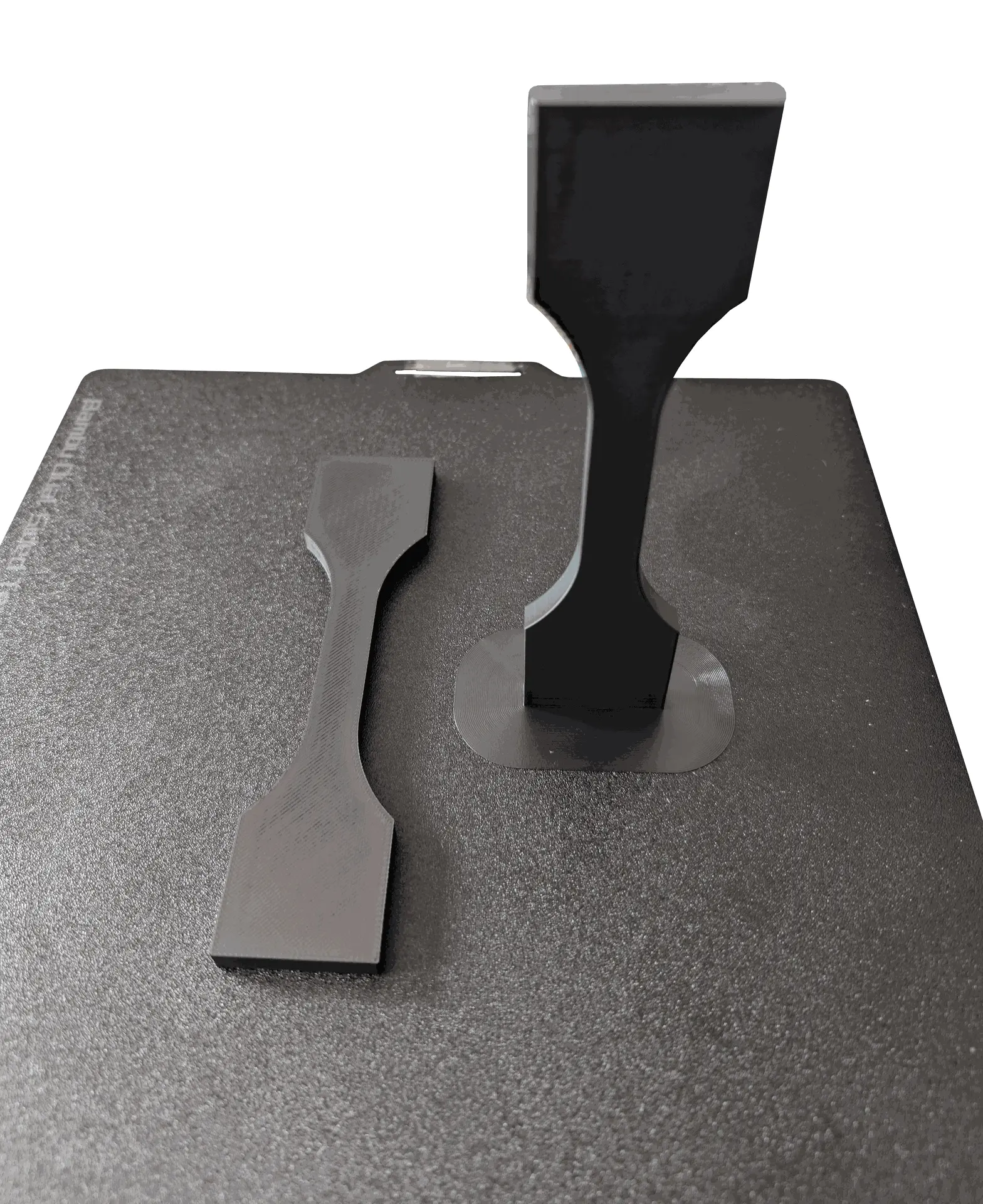
To make informed decisions, we meticulously tested various ASA filaments. For this, we produced tensile samples under identical and strictly controlled conditions.
Preparation is everything: We treated the material in a special filament dryer before printing to ensure that no residual moisture distorts the results.
Professional tests: The produced samples were tested by the independent company Dynatec Gesellschaft für CAE und Dynamik mbH on a professional tensile testing machine.
Practical manufacturing:
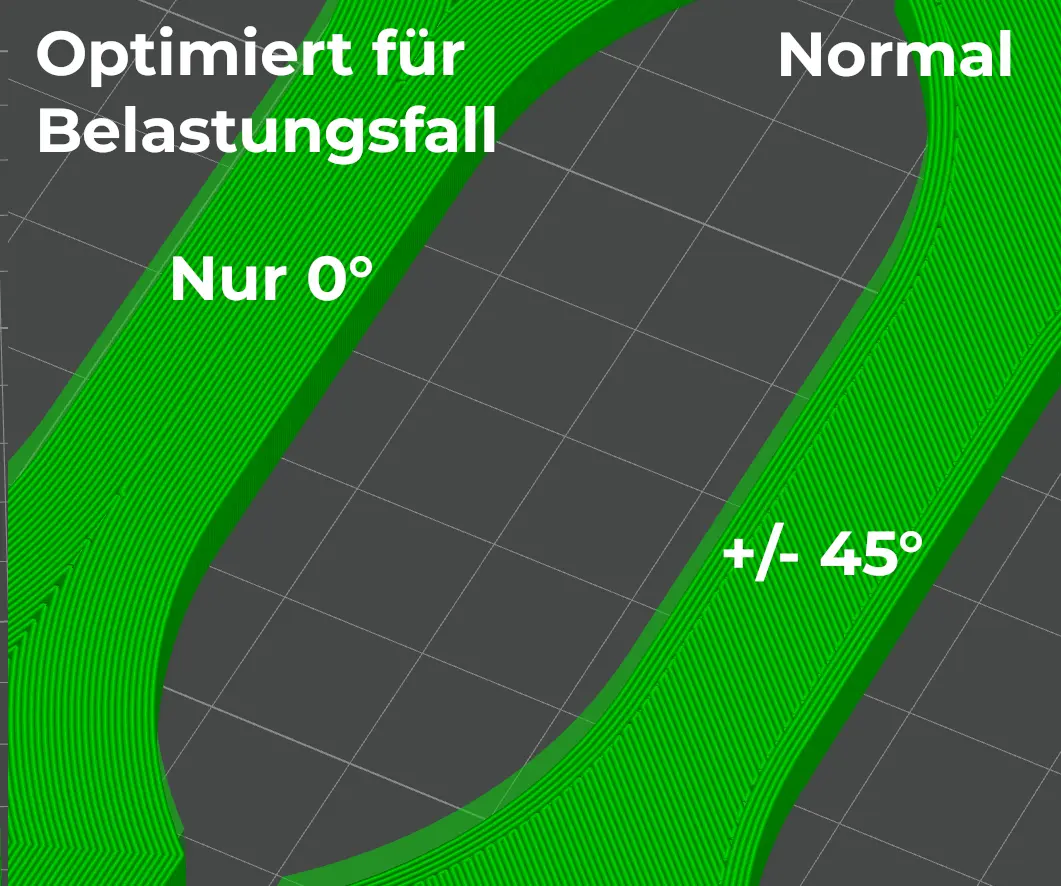
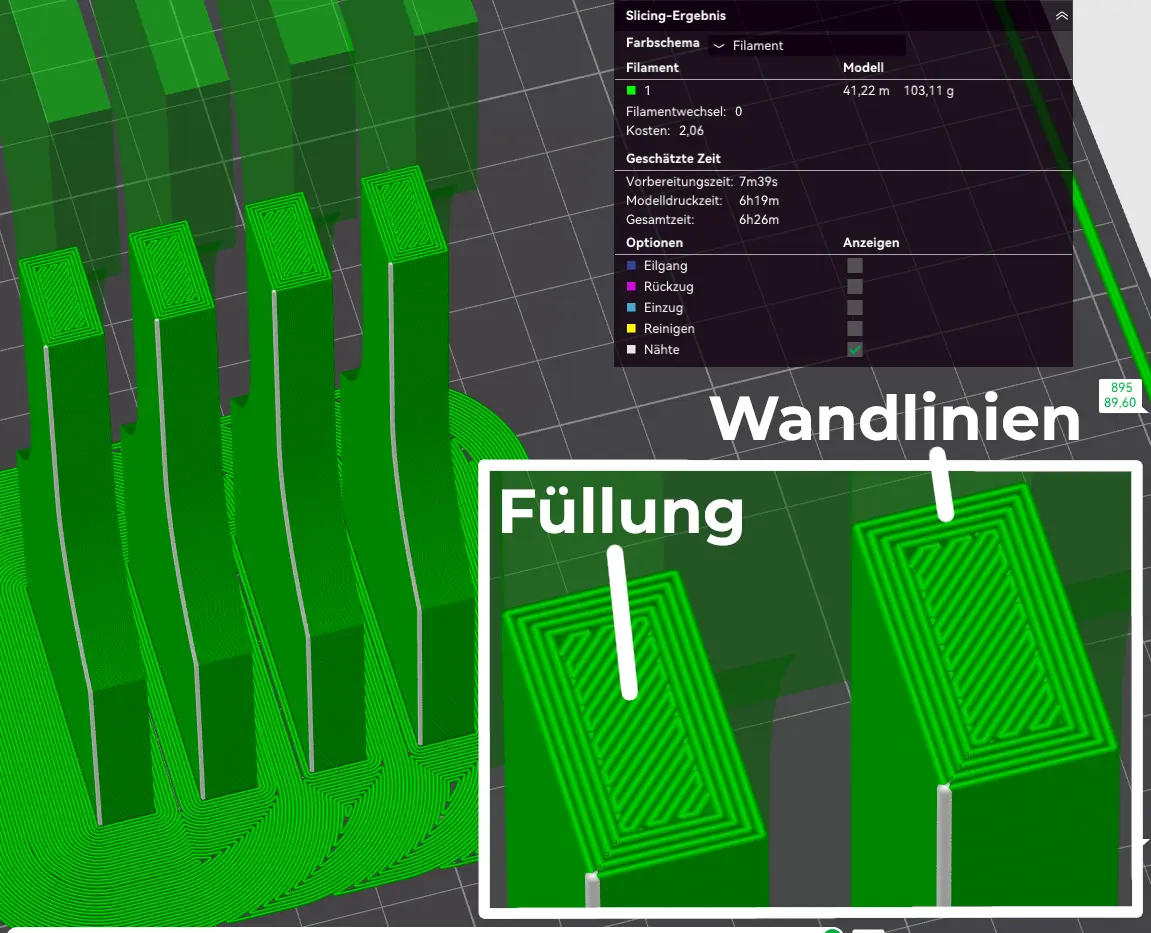
The production took place on a highly reliable Bambu Lab X1 Carbon printer with the same settings that we also use for our final products. We consciously decided against optimisation for maximum strength. Instead, we chose a practical alignment of the print lines (+45°/-45°) to achieve a material behaviour that corresponds to use in the real world.
Our finding: ASA-CF is not always the best choice
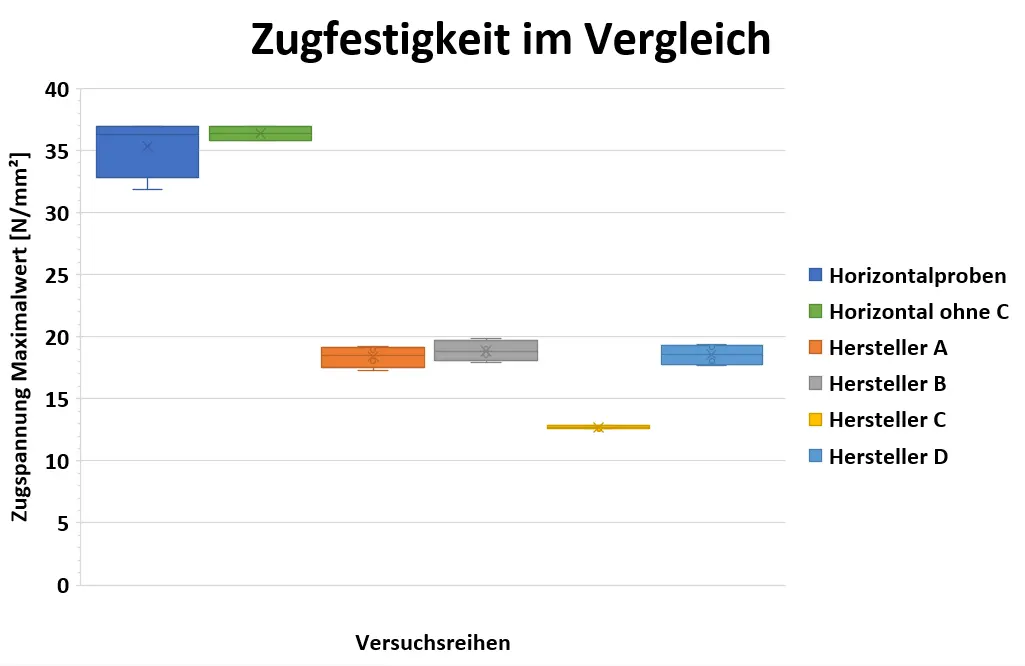
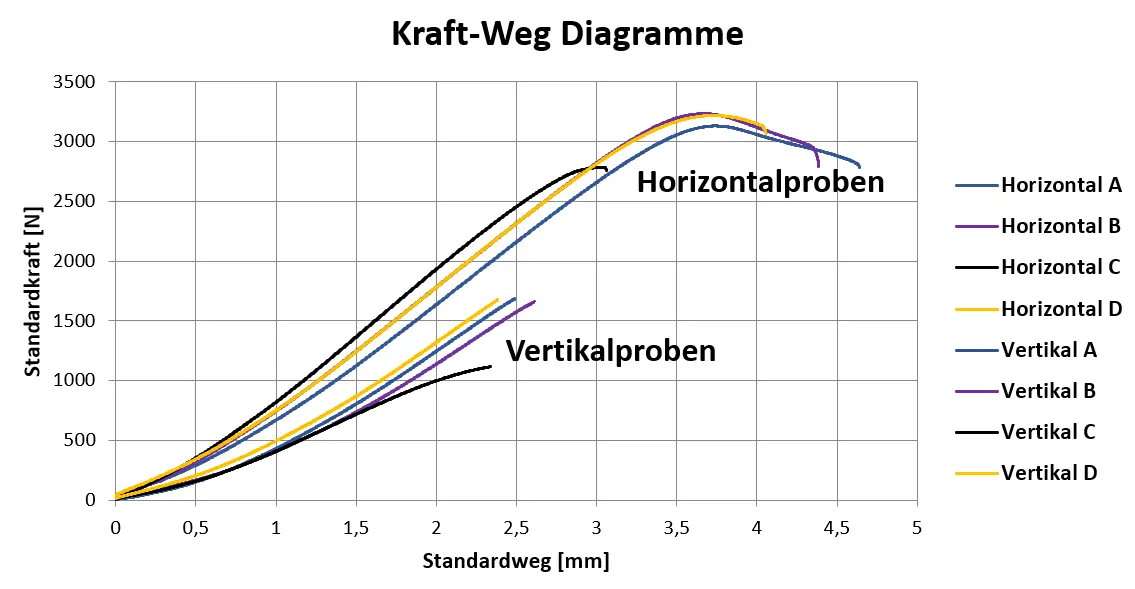
The tests showed that the vertical samples (i.e. the layer adhesion) only achieve about half of the maximum tensile strength of horizontal samples. Each layer represents a potential weak point, so layer adhesion was particularly important to us.
Interestingly, the material reinforced with short carbon fibres (ASA-CF) performed significantly worse in our tests than other materials. The carbon fibres led to a more brittle material, which showed significant deficiencies, especially in layer adhesion. We suspect that the fibres in the printed component do not contribute to force transmission but rather act as foreign bodies.
Nevertheless, ASA-CF has its place – it creates an outstanding visual and tactile surface and can contribute to thermal stability. However, for components exposed to tensile or shear forces, it is not the ideal choice.
The result: Quality that convinces
The results of the material investigations have confirmed that there are hardly any quality differences in terms of tensile strength among the filaments we tested that go beyond the measurement inaccuracies.
We ultimately decided on Material D. It not only provided excellent results in layer adhesion and tensile strength, but the measurements were also only slightly below those of the best tested Material B. As the minor differences lie within the range of measurement accuracy, we can offer you a product that is technically absolutely convincing.
With Material D, we are using a high-quality material that has no disadvantages in practice compared to the more expensive alternative B. This ensures that our grinding support withstands the stresses of everyday use and that we deliver the quality you can expect from us.