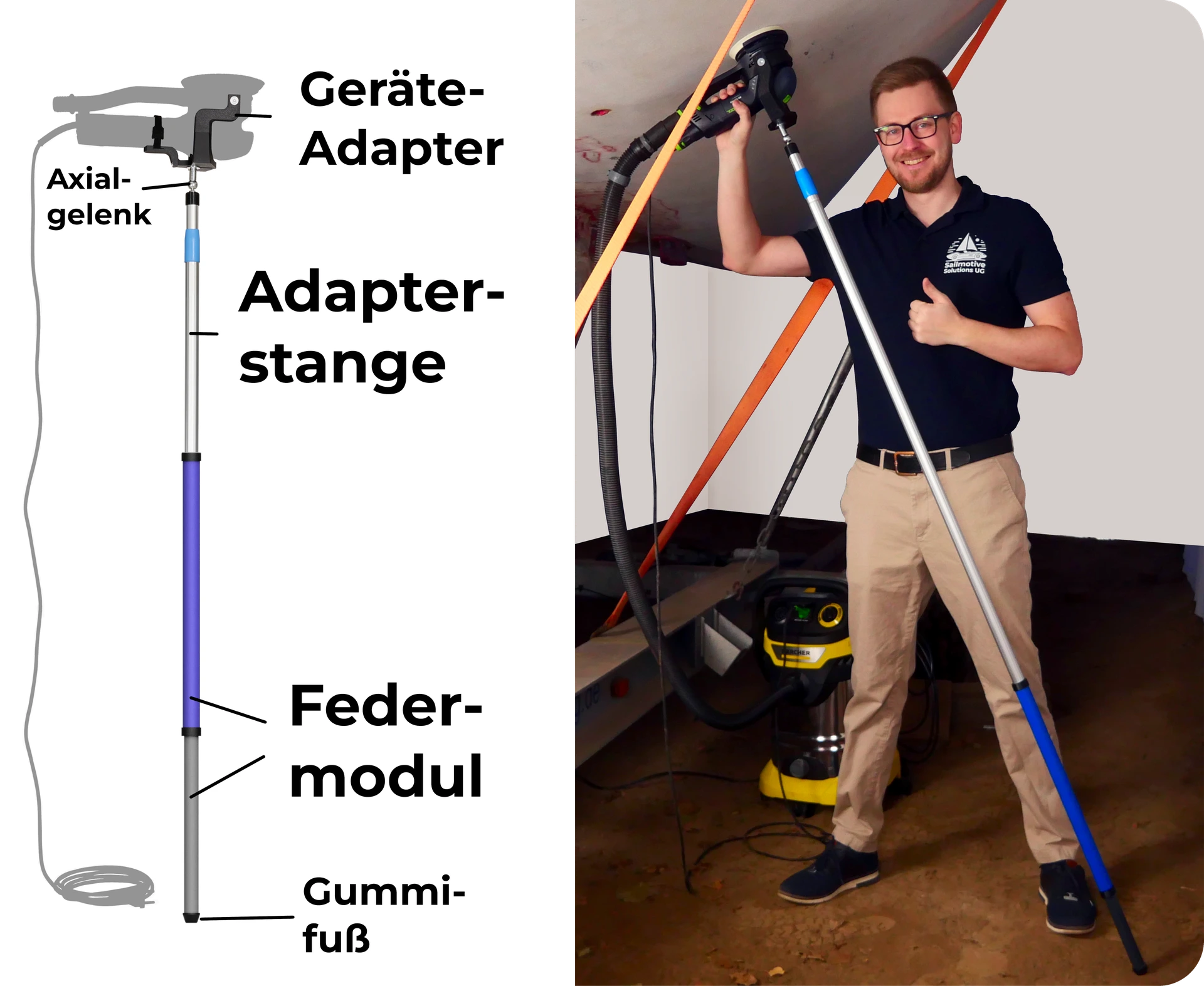
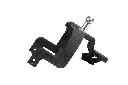
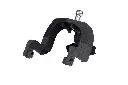
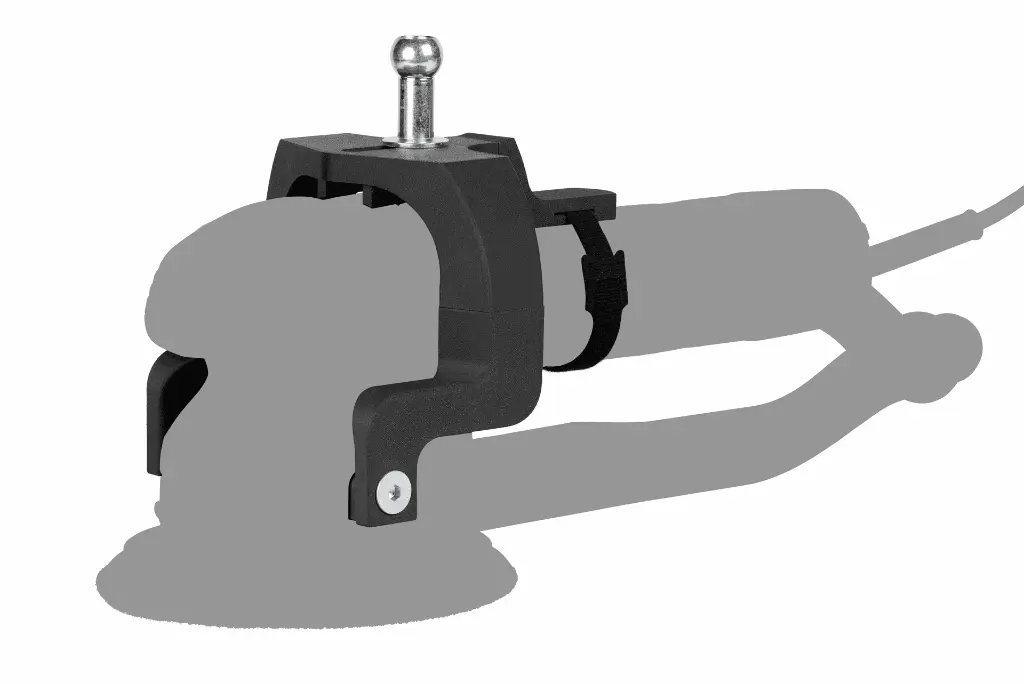
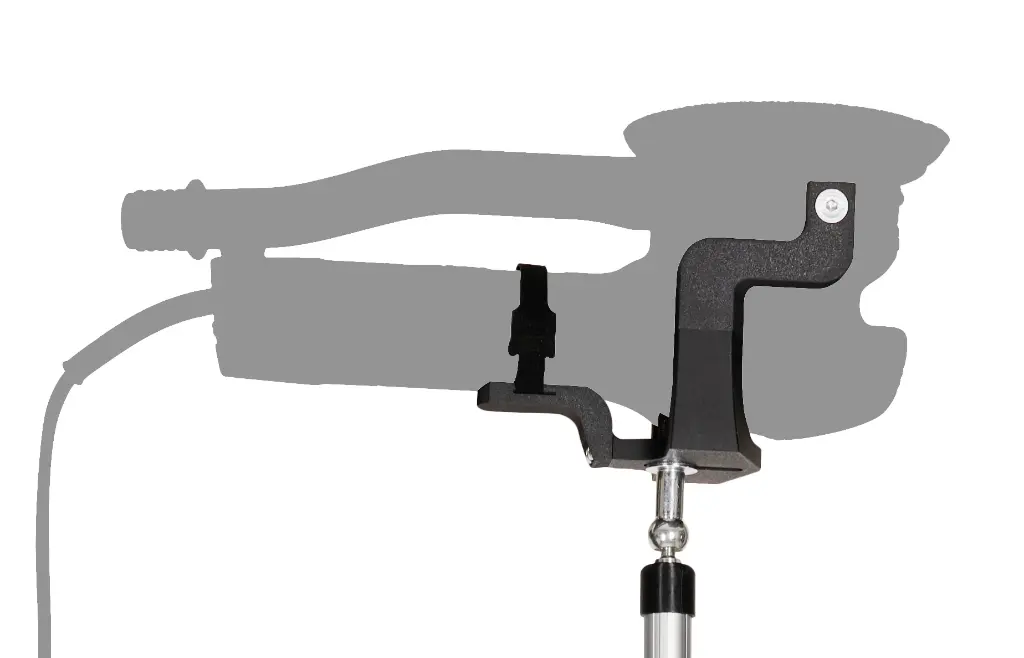
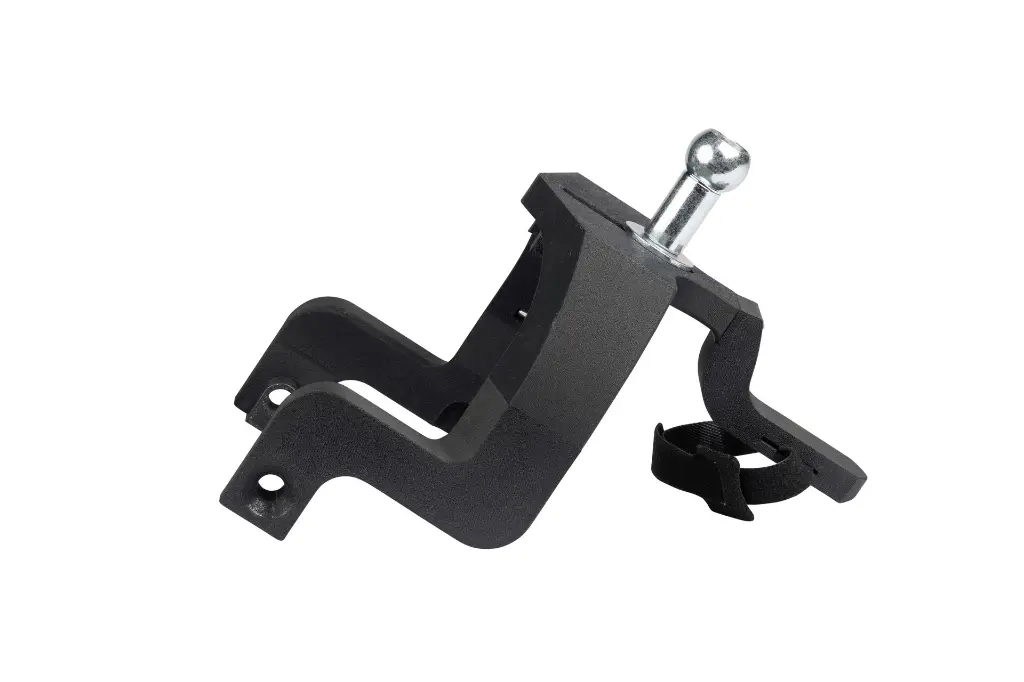
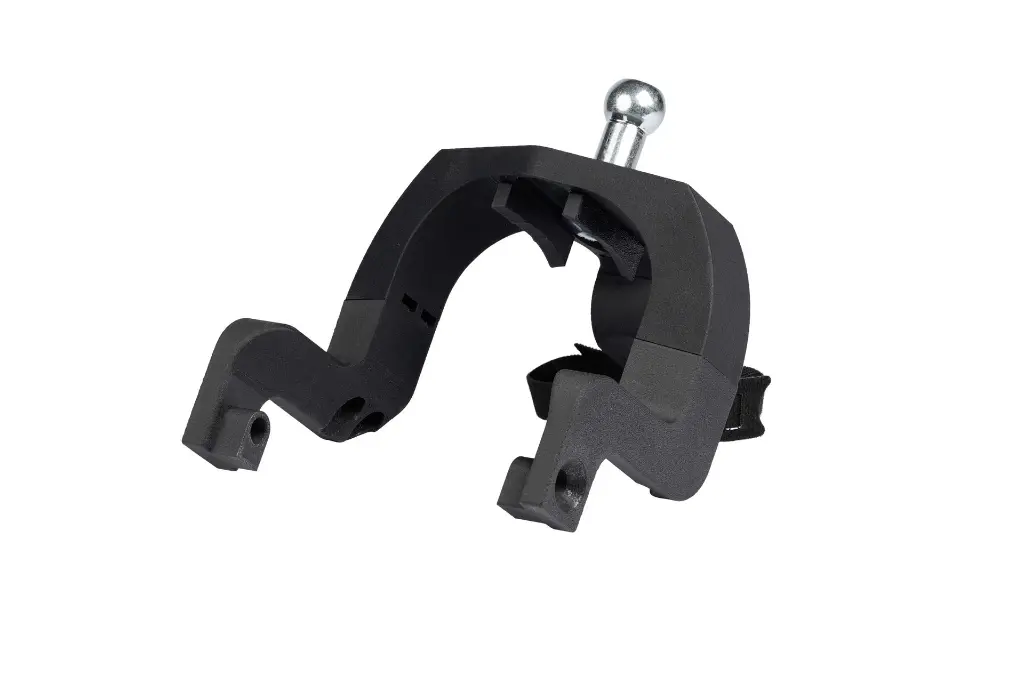
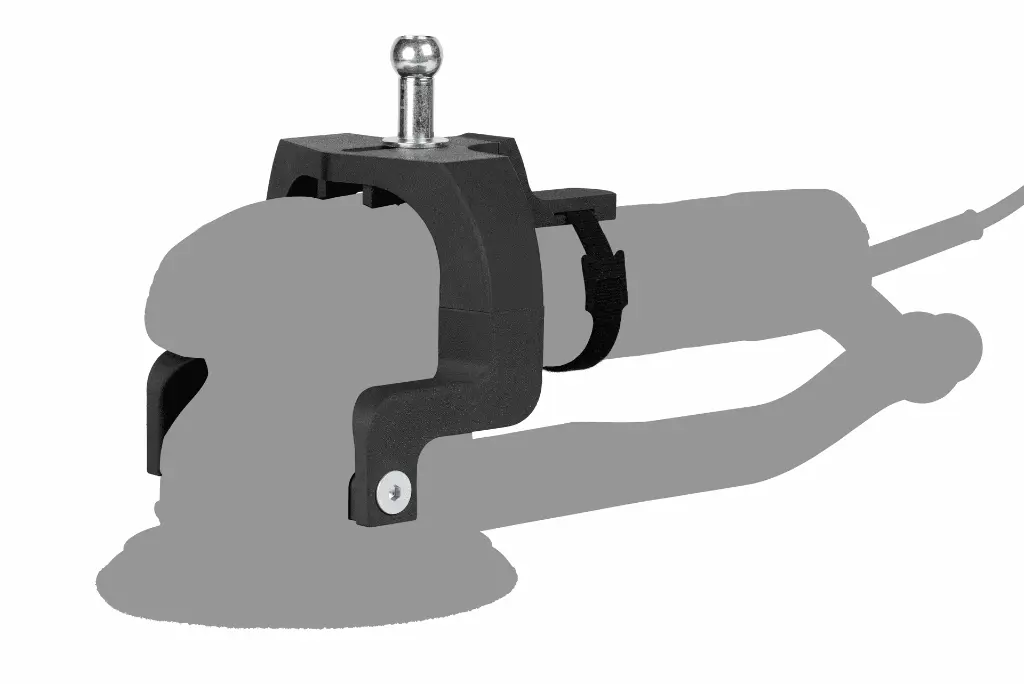
Availability: After Boot Düsseldorf, we will be focusing on manufacturing the sanding supports and following up on the trade fair. We apologize for any inconvenience, but orders cannot be shipped until February 6, 2026.
Product details
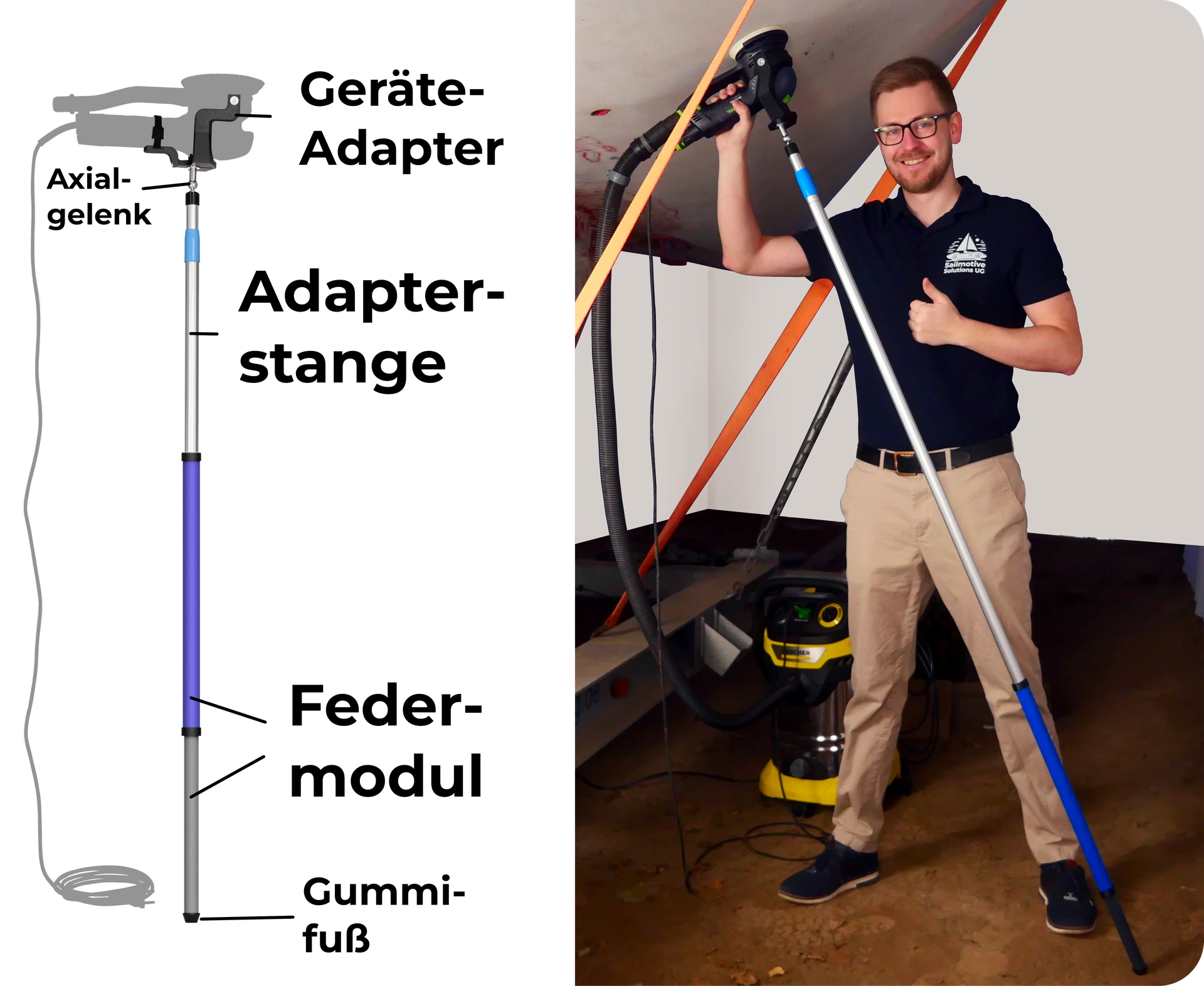
Key facts at a glance:
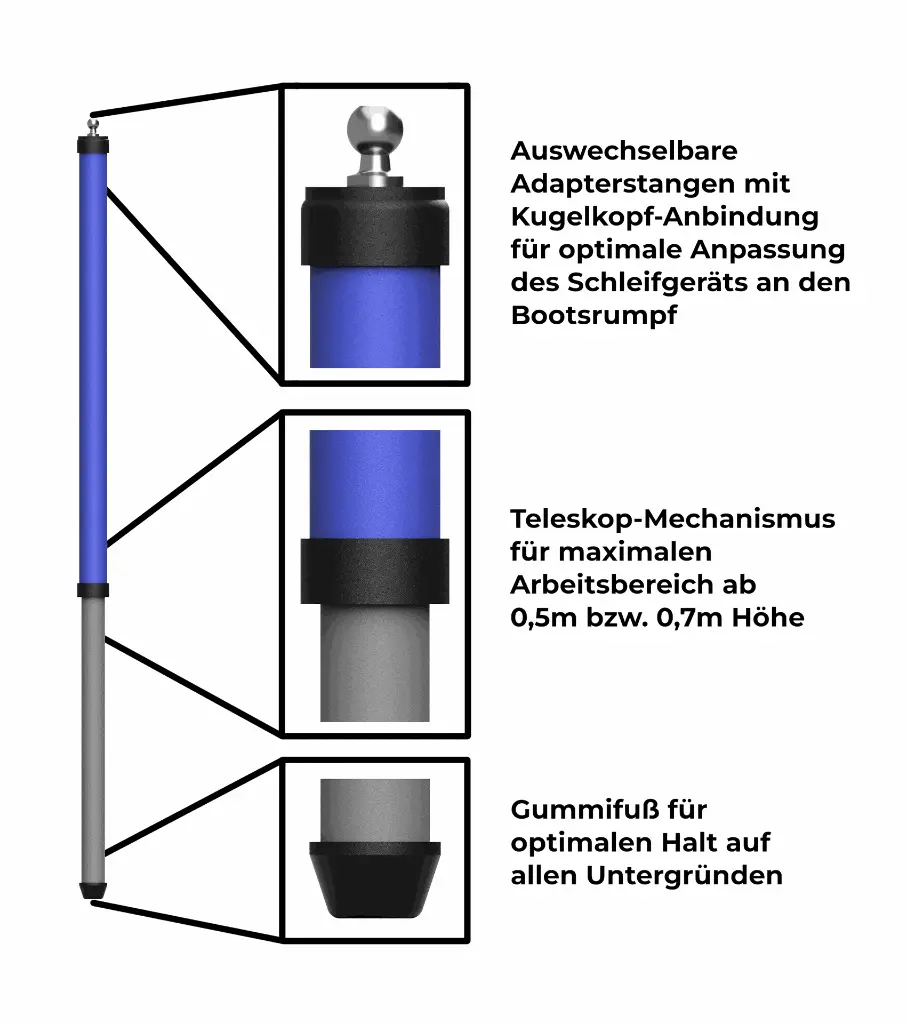
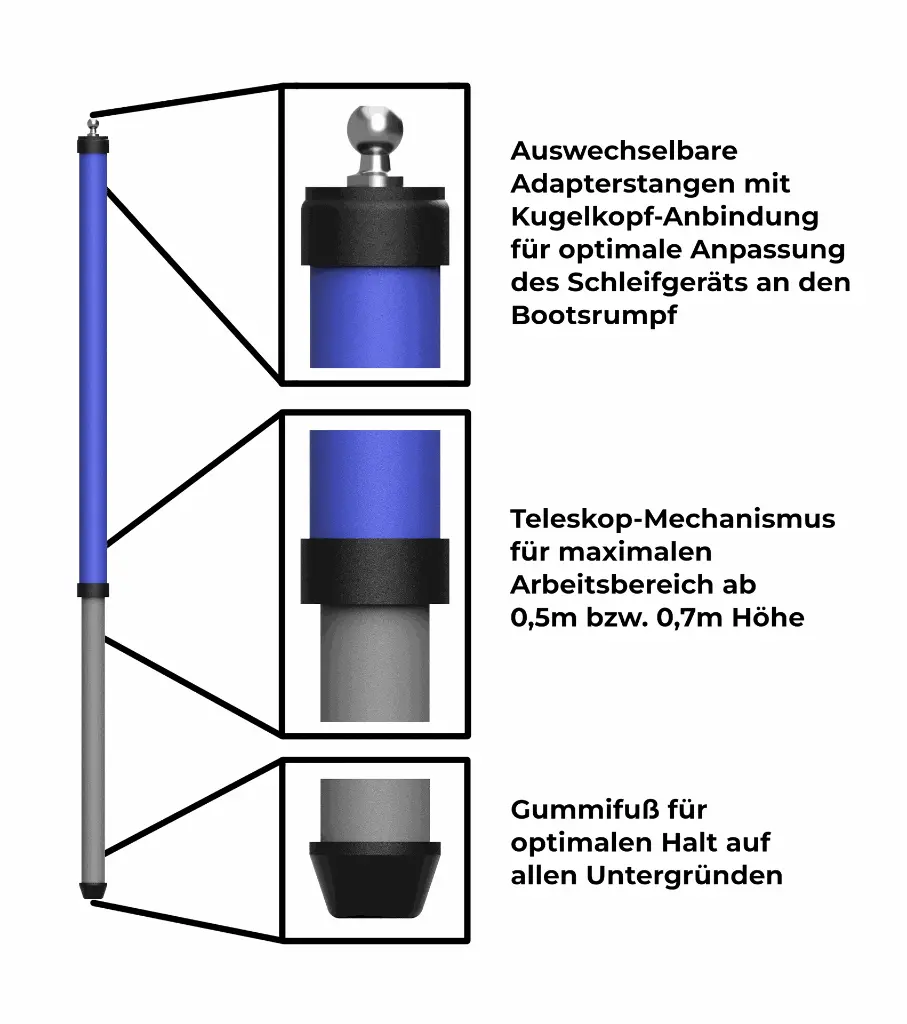
- Minimal height: 0,5m/0,7m
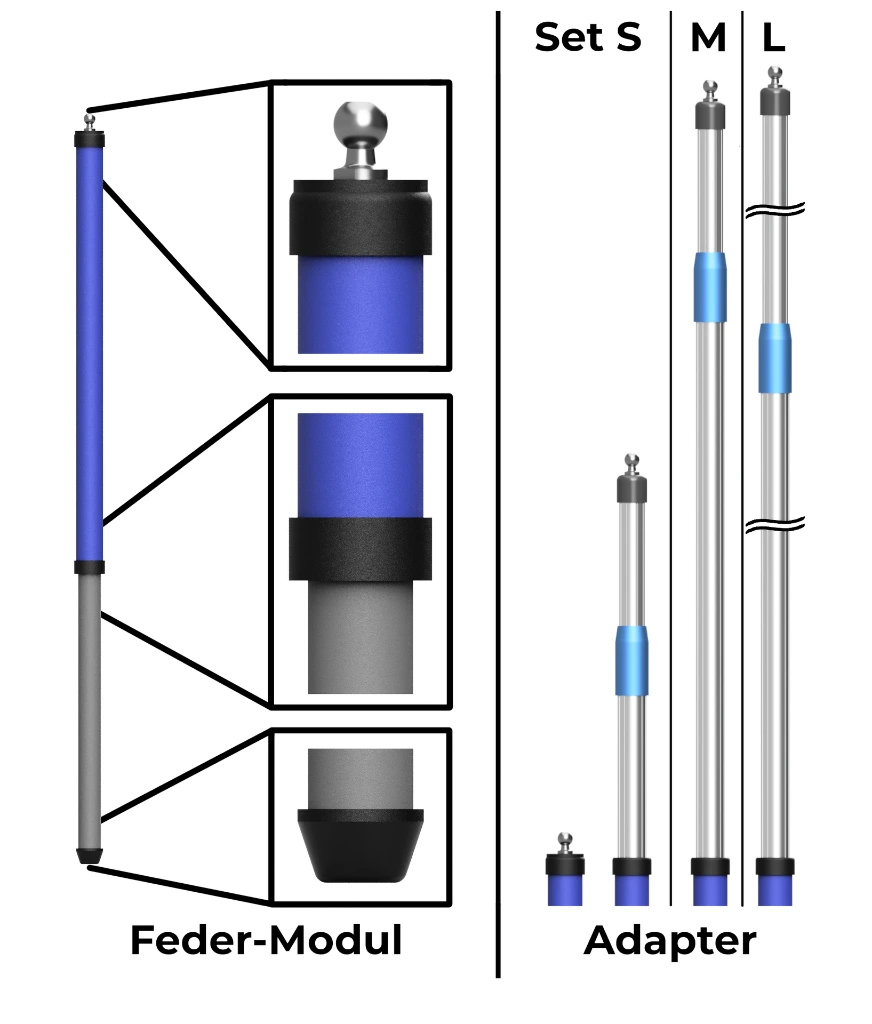
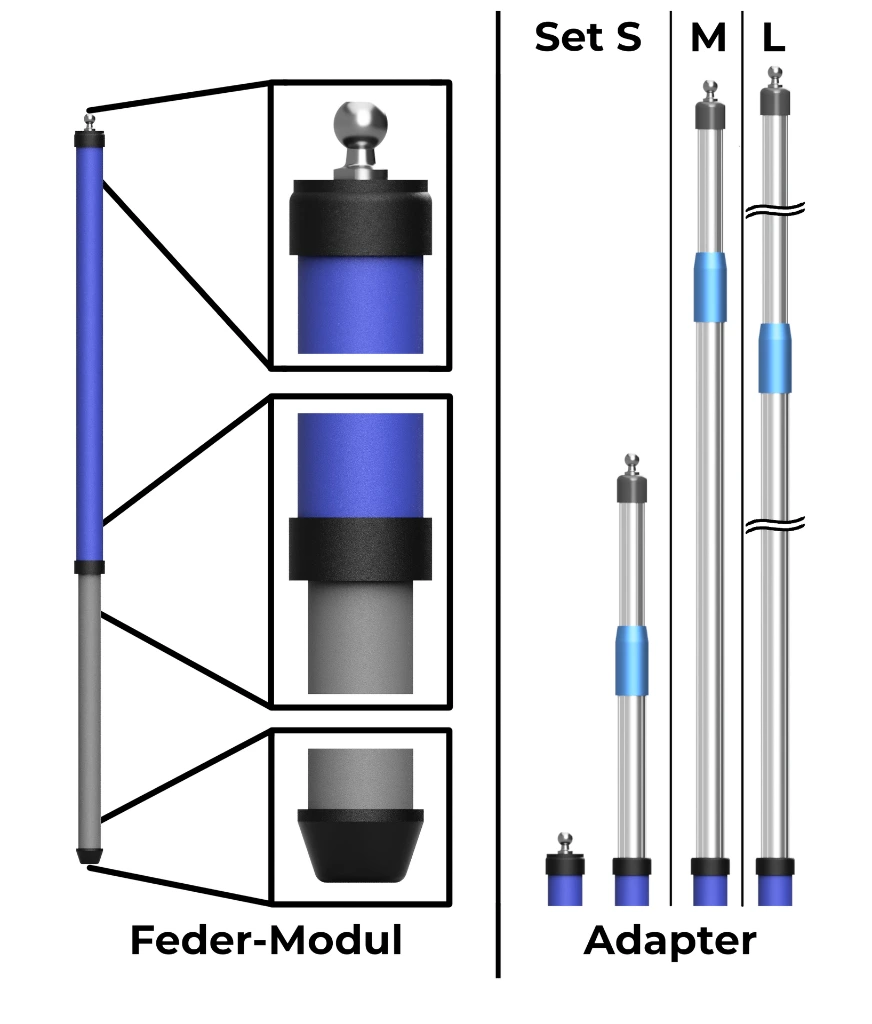
- Max height: 2,08m*
- Spring travel: 300mm
- Adjustment stroke: 510mm
- Contact pressure: 25-34N / 50-75N
- Rod material: Aluminium
- Steel parts: Galvanized
- Plastics: ASA, 3D-Print
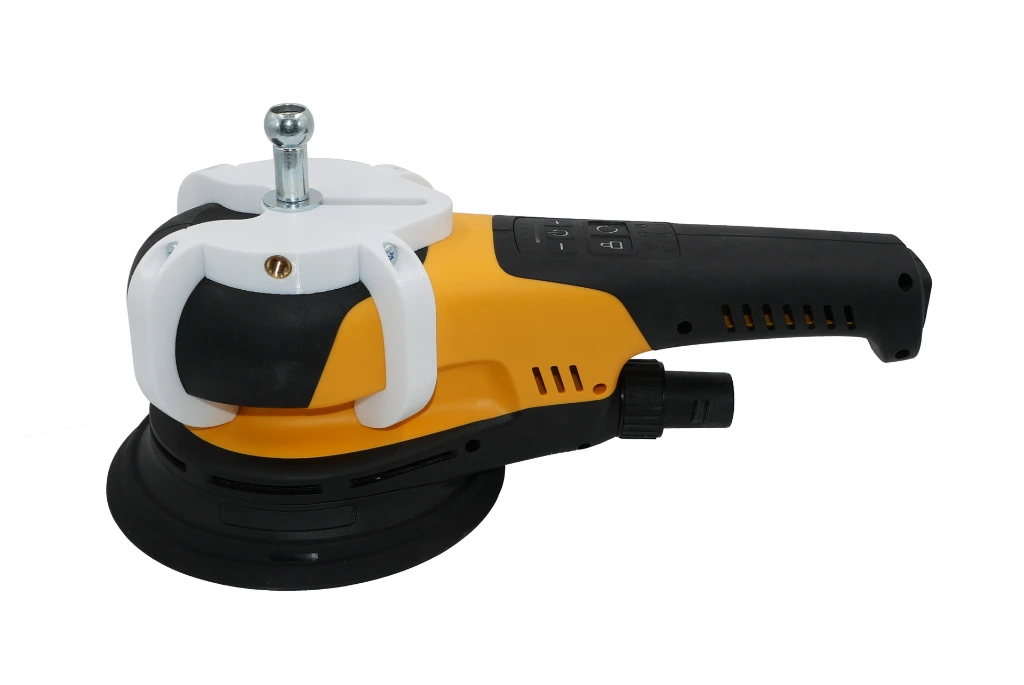
- Adjustability of the attachment point on the head adapter
- Direct force transmission
- Slim design for optimal handling
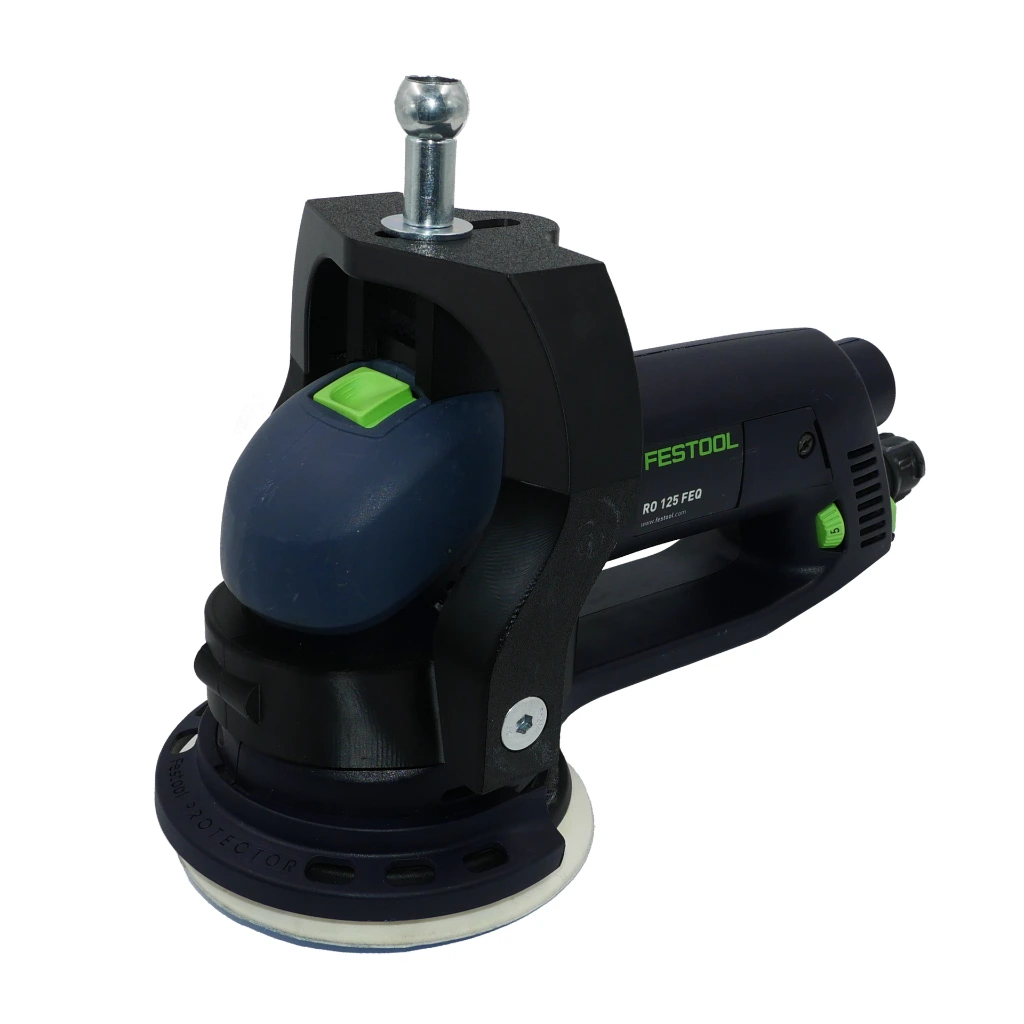
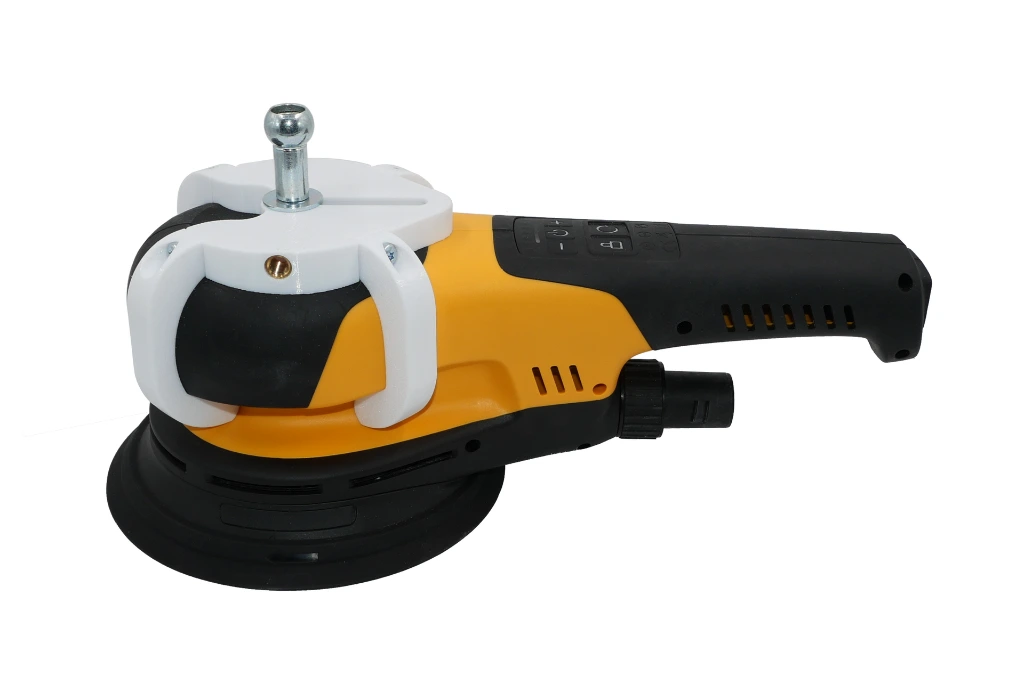
- Stable 3-point mounting
* Ordering the optional “long tele adapter” extends the range of use to up to 3.30 m!
Material selection in 3D printing
Additive manufacturing processes have long since found their way into series production. With the new generation of machines, reliable and high-quality results are no longer the exception. But choosing the right material is crucial! ASA is the best choice. It is very similar to the well-known ABS, but impresses with its excellent UV resistance and better workability. However, experience shows that material data sheets are often unreliable. That's why we decided not to leave anything to chance—especially not the choice of material. Through tensile tests, we were able to determine the best material for this application, which we now use for the production of all plastic parts. For us, “Made in Germany” is not just a label. We develop our products with a passion for the best quality and an eye for detail. See for yourself!
Choosing the right sander
There are many different opinions when it comes to choosing a sander, which is why we didn't want to rely on them. We tested many sanders for sanding the underwater hull and were never really satisfied. Some devices are too imprecise and deliver an uneven sanding pattern, while others simply do not remove enough material. In the end, random orbital sanders and gear-driven random orbital sanders remained as the most suitable devices. In our tests, we compared these categories of tools side by side. The result is clear: if you can do without a little bit of removal speed, we recommend using one of the compatible conventional eccentric sanders (BOSCH GEX or Metabo SXE). These tools are cost-effective and very easy to handle. Sanding the underwater hull of a 40-foot yacht down to the gelcoat may take a few hours longer, but the work is very relaxed. Gear-driven random orbital sanders (BOSCH GET or Makita BO6050J) deliver higher removal rates but are more difficult to handle. The work is faster, but also more strenuous. Nevertheless, the effort is only a fraction of what it would be without our sanding support!